The costliest decision in any innovation project is made in the first ten minutes according to new book from Wazoku CEO
Simon Hill's ‘Mapping Value’ shows that 70% of innovation solutions come from outside the field that owns the problem,
Press Release Disclaimer: This is a press release distributed through the XPR Media network. It has not been independently verified by our newsroom.

Simon Hill’s ‘Mapping Value’ shows that 70% of innovation solutions come from outside the field that owns the problem, and explains how leaders can find them
LONDON, UNITED KINGDOM, October 6, 2026 /EINPresswire.com/ — The most expensive innovation mistake an organisation makes is a confident answer to the wrong question, usually in the first ten minutes of a meeting, according to Mapping Value, the new book by award-winning author Simon Hill, the CEO of global innovation scale-up, Wazoku.
Mapping Value argues that most innovation spend is wasted because the problem itself was framed too narrowly from the outset, often because of the language of whoever named it. Once a problem is described, Hill argues, an organisation’s budget, hires and effort lock onto a single direction, closing off the fields most likely to hold the real solution, without anyone ever recording that a choice was made.
Drawing on more than two decades of data from Wazoku’s open innovation marketplace Innocentive, and global community of over a million problem-solvers across 195 countries, Mapping Value shows that around 70% of winning solutions have come from outside the field that owns the problem, not from within it.
“Every organisation trusts its experts to solve its hardest problems, and that’s not incorrect to do so,” said Simon Hill. “But the person who names a problem is rarely the person who will solve it. A materials scientist hears a materials problem. A lawyer hears a contract problem. Neither is wrong, but the naming steers where you’ll spend the next two years and however many million pounds, before a single option has been discussed. Mapping Value is a five-step method for opening a problem up before you close it down.”
Hill’s argument is that a flawless, well-resourced process can still be aimed at entirely the wrong target, and that this waste is largely invisible, because the project usually still ‘works’; it just never gets compared with the better answer that was never on the table.
The book sets out a five-step method – reframe and bound the real need, find where solutions could come from, map the landscape, measure where value lives, and commit – illustrated through use cases including:
• NASA’s forecasting of dangerous solar particle storms, cracked not by a space scientist but by a retired radio-frequency engineer, using physics borrowed from an unrelated field;
• A Canadian gold miner that published its confidential geological data online and had outsiders identify roughly half of what became a multi-billion-dollar seam of ore;
• Video game players cracking the structure of an HIV-related protein in three weeks, after it had defied scientists for fifteen years.
“These stories are all about what happens when you measure a solution on its merits,” said Hill. “Most organisations do the opposite, screening out the strangest, most distant ideas first, which the evidence says are exactly the ones most likely to carry the value.”
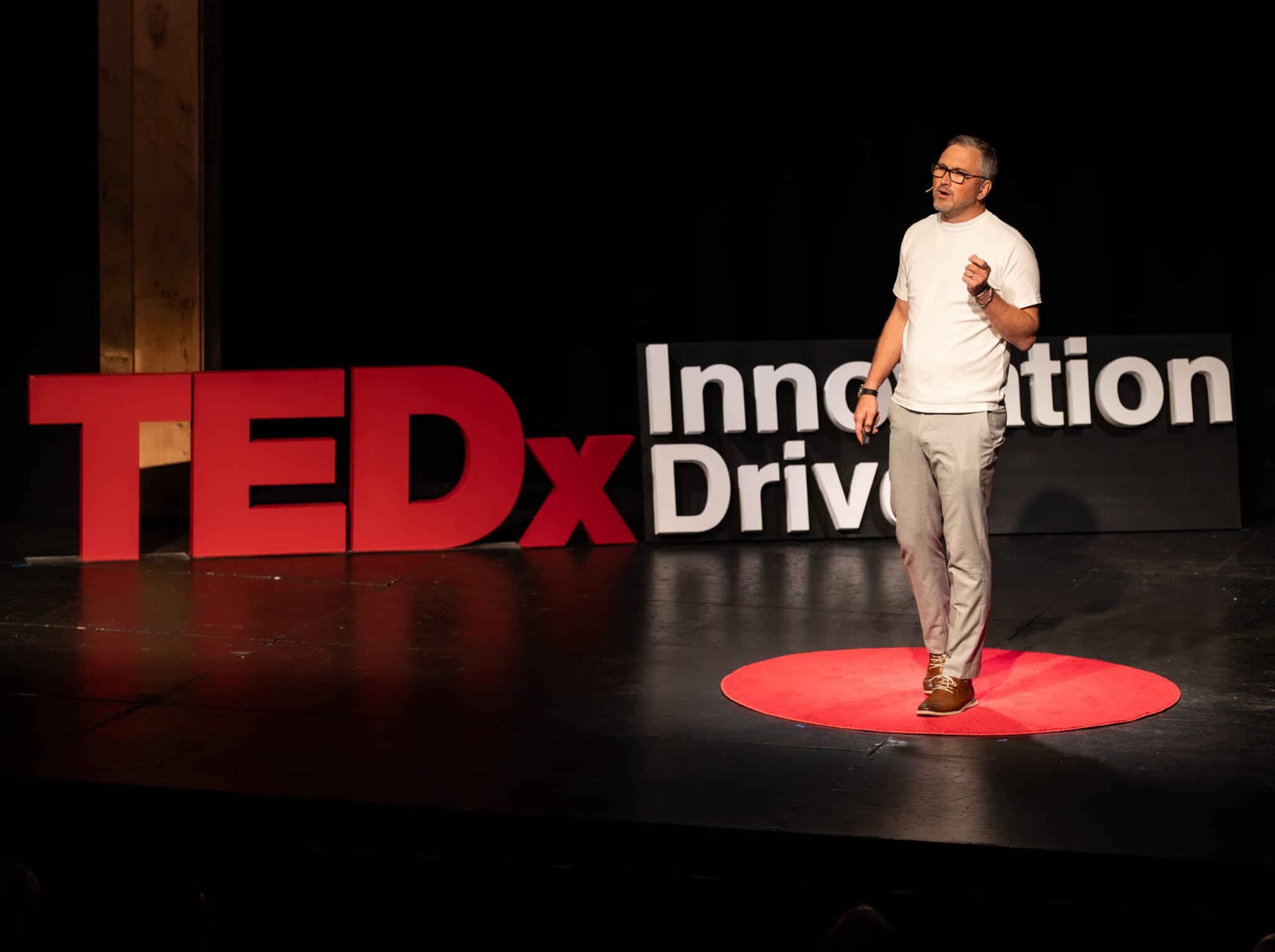
Hill previewed the ideas behind Mapping Value last week in a TEDx talk, ‘Genius Doesn’t Scale’, at TEDx Innovation Drive in Fairfield, Connecticut. In it, he shared a further finding from Wazoku’s data: challenges that reach solvers in only a handful of countries fail roughly two-thirds of the time, but in 25 years, not one challenge that reached 40 or more countries has failed.
“The variable that predicts innovation success is not the seniority of the experts in the room, it is how far the room reaches,” said Hill. “The thing standing between us and the answer is rarely a missing genius, but a door that was never built to let the right people in.”
Mapping Value follows Hill’s 2025 book Expected Value: The System to Align Innovation, Strategy, and Value Creation, for which Hill was named Author of the Year at the Thinkers360 2026 Annual Awards.
Simon Hill is the founder and CEO of Wazoku, the global innovation scale-up that helps organisations activate Human Intelligence to solve complex challenges and create measurable value.
Mapping Value is available now in print and eBook via infinite-loop.co. An audiobook will follow.
– ends –
About Wazoku
Wazoku’s combination of human and synthetic intelligence enables enterprises, public sector organizations and academic institutions to discover opportunities, access external expertise, manage innovation portfolios, commercialize IP, track value creation or simply outsource for a specific outcome.
www.wazoku.com
P Allen
Rise PR
email us here
Visit us on social media:
LinkedIn
Facebook
YouTube
Legal Disclaimer:
EIN Presswire provides this news content “as is” without warranty of any kind. We do not accept any responsibility or liability
for the accuracy, content, images, videos, licenses, completeness, legality, or reliability of the information contained in this
article. If you have any complaints or copyright issues related to this article, kindly contact the author above.

Media gallery