
All County Collision Explains Why Some Collision Repairs Require Diagnostic Scanning
EUSTIS, FL - October 21, 2026 - PRESSADVANTAGE - All County Collision has published consumer guidance explaining why
Press Release Disclaimer: This is a press release distributed through the XPR Media network. It has not been independently verified by our newsroom.
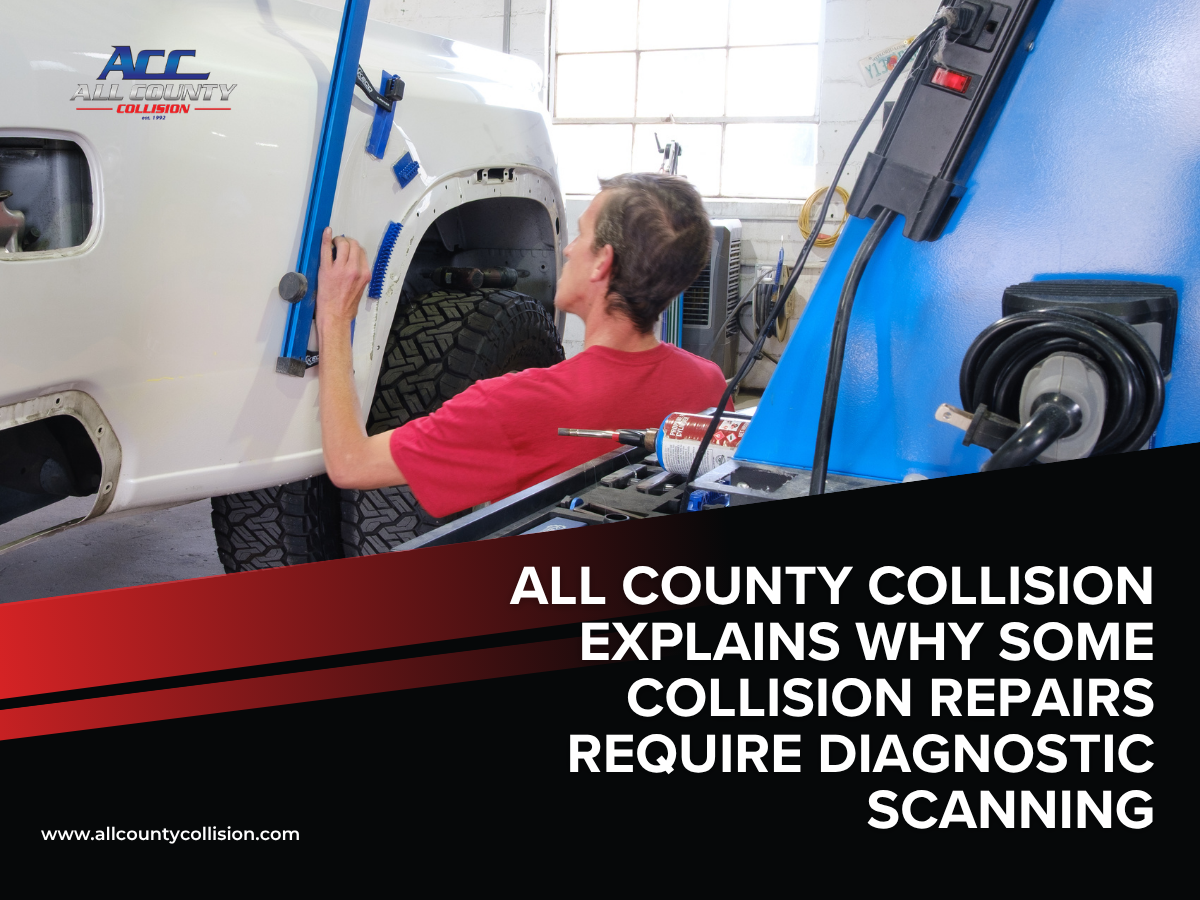

EUSTIS, FL – October 21, 2026 – PRESSADVANTAGE –
All County Collision has published consumer guidance explaining why diagnostic scanning can become part of certain collision repairs even when the most noticeable damage involves exterior body components. The October publication focuses on how electronic diagnostic information can support repair planning before, during, and after work on vehicles equipped with interconnected electronic systems.
The guidance expands on All County Collision’s collision repair process by distinguishing diagnostic scanning from a visual inspection and from ADAS calibration. The resource organizes scanning into three functions: documenting electronic information associated with the vehicle, identifying systems that may require additional evaluation, and supporting post-repair verification when applicable.
Modern vehicles use electronic control modules to manage or monitor numerous functions. Depending on the vehicle, these systems can be associated with restraint equipment, lighting, steering, braking, cameras, sensors, driver-assistance technology, and other components.
After a collision, visible body damage alone may not provide complete information about these electronic systems. A damaged bumper, door, mirror, grille, or other exterior component can be located near wiring, sensors, connectors, or electronically monitored equipment.
Diagnostic scanning allows technicians to communicate with supported vehicle control modules and review diagnostic information stored by the vehicle. This information can provide another source of evidence when developing the repair plan.
A diagnostic trouble code does not automatically identify a damaged component or establish that replacement is necessary. Codes can have different causes and require interpretation within the context of the collision, vehicle condition, and applicable diagnostic procedures.
This distinction is a central focus of the October guidance. Scanning can provide information, but the information must be evaluated rather than treated as a repair instruction by itself.
A pre-repair scan may be applicable on certain vehicles or repairs to document electronic conditions before repair operations begin. When diagnostic information corresponds with an area affected by the collision, technicians can determine whether further testing, inspection, or vehicle-specific procedures are appropriate.
Scanning can also help identify electronic conditions that may not produce an immediately obvious symptom. Not every stored condition will be collision-related, which is why the collision location, vehicle history available to the repairer, repair procedures, and diagnostic findings can be considered together.
Repair operations themselves can involve electronic components. Bumpers, lamps, mirrors, doors, seats, steering-related components, and other areas may contain wiring or equipment that must be disconnected or removed during certain repairs. Vehicle-specific procedures can identify operations associated with those components.
All County Collision’s ADAS calibration information provides additional context for an important distinction between scanning and calibration. Although both can involve vehicle electronics, they perform different functions.
A diagnostic scan communicates with vehicle modules and retrieves electronic information supported by the vehicle. Calibration, when required, involves establishing or confirming specified operating references for particular cameras, sensors, or other systems according to applicable procedures.
Completing a scan therefore does not substitute for a required calibration, and performing a calibration does not necessarily replace other diagnostic procedures. Whether either operation applies depends on the vehicle, installed equipment, collision damage, components affected, and repairs performed.
Post-repair scanning can provide another checkpoint when required by the vehicle or repair procedures. After components have been repaired, replaced, reconnected, or reassembled, technicians can review relevant electronic information as part of completing the documented repair process.
The presence of a warning light or message can also provide useful information, but the absence of a dashboard warning does not by itself describe the condition of every electronically monitored system. Applicable diagnostic procedures provide a more vehicle-specific basis for determining what checks are appropriate.
Manufacturer repair information can play an important role in these decisions because scanning requirements and procedures vary among vehicles. Repair planners can review information applicable to the individual year, make, model, equipment, and repair operation rather than assuming that every collision requires the same diagnostic sequence.
The October publication is intended to clarify a common source of confusion for consumers. Diagnostic scanning is not simply an electronic version of looking for visible collision damage, nor is it another term for ADAS calibration. It is a diagnostic step that can provide information about electronically monitored systems when applicable to the vehicle and repair.
This distinction becomes increasingly relevant when collision repair involves components that serve both physical and electronic functions. A bumper, for example, can contribute to the vehicle’s exterior appearance while also providing locations for wiring or electronic equipment. A mirror can be a body component while incorporating electrical features. Evaluating the vehicle can therefore involve both physical inspection and electronic information.
The guidance does not suggest that every collision requires identical scanning procedures. The appropriate operations depend on the individual vehicle, documented damage, repairs performed, and applicable manufacturer information.
The October publication gives consumers a clearer framework for understanding why diagnostic scanning can appear on a collision repair plan and why it is treated separately from body repair, visual inspection, and calibration.
Information about the facility is available through All County Collision’s Eustis location.
All County Collision provides collision repair and auto body repair services for vehicle owners in Eustis and surrounding Central Florida communities. The facility is located at 25 S Bay St, Eustis, FL 32726, United States.
###
For more information about All County Collision, contact the company here:
All County Collision
Ryan DeMarco
3523574599
ryan@allcountycollision.com
25 S Bay Street, Eustis, FL 32726
